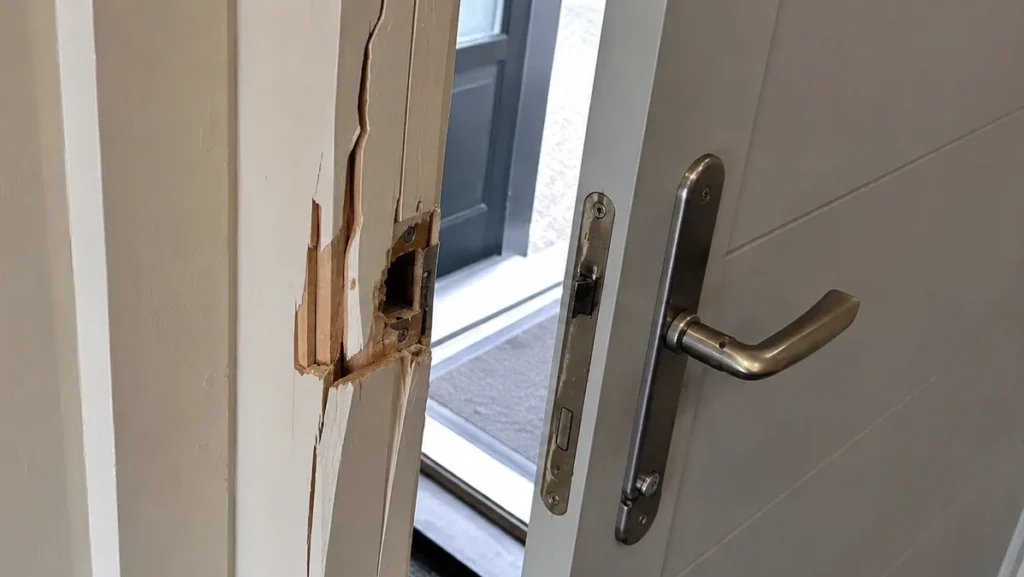
Break-in repairs Gold Coast property owners need after a burglary can range from replacing a forced lock to securing a damaged door frame or rekeying locks after stolen keys.
First, focus on personal safety. Do not enter the property if you think someone may still be inside. Instead, move somewhere safe and call Triple Zero on 000 if anyone is in danger, injured or the offender may still be nearby.
After reporting the break-in, follow police instructions. If they are attending, wait until they have examined the property; if not, photograph the damage before a locksmith secures the doors, replaces compromised locks and prevents the same entry method being used again.
Break-in repairs Gold Coast: what should you do first?
Discovering a break-in can feel overwhelming. However, working through the situation in the correct order can protect you, preserve useful evidence and make the repair process easier.
Take these steps:
- Move somewhere safe
- Do not confront anyone
- Call Triple Zero if the incident is still happening
- Contact Policelink for a non-urgent break-in
- Follow any instructions police provide
- Photograph the damage before repairs begin
- Contact your insurer, landlord or property manager
- Arrange urgent locksmith repairs
- Secure any other vulnerable entry points
For a non-urgent incident, call Policelink on 131 444 or use the official Queensland Police online reporting options.
Do not enter if someone may still be inside
Stay outside if you arrive home or at work and notice an open door, broken window, damaged lock or other signs of forced entry.
Do not walk through the property to check what is missing. An offender may still be inside, and entering could place you in danger.
Instead, move to a safe location, such as a neighbour’s property or your locked car, and call Triple Zero on 000.
Give police:
- The property address
- Your current location
- What you have seen
- Whether you saw anyone leaving
- A description of any person or car
- Whether anyone may be inside
- Details of any injuries or immediate risks
Then wait for police instructions before approaching the property.
Protect evidence and photograph the damage
If police are attending, avoid touching the damaged entry point until they have examined it.
Do not:
- Test the damaged lock repeatedly
- Move broken hardware
- Clean marks or fingerprints
- Throw away damaged parts
- Repair the entry point before police examine it
- Allow unnecessary people through the area
However, police may decide that attendance is not required for every reported incident. In that case, take clear photographs before a locksmith starts repairs.
Photograph:
- The complete door or window
- The damaged lock
- The door frame
- Bent or split sections
- Tool marks
- Broken glass
- Damaged handles
- Items disturbed inside
- The surrounding area
Also keep copies of locksmith invoices, replacement costs and the police report or reference number.
Contact your insurer, landlord or property manager
Next, contact the relevant person or organisation as soon as practical.
Homeowners should notify their insurer and ask what photographs, reports or invoices they require.
Tenants should contact their landlord or property manager. They may need to approve replacement hardware or organise repairs to the door, frame, window or other parts of the building.
Apartment residents may also need to contact building management or the body corporate when the break-in involves:
- A common entrance
- A basement door
- A storage cage
- A garage
- An intercom-controlled door
- Shared access hardware
Where practical, check whether approval is required before permanent repairs begin. However, do not leave a property unsecured while waiting for paperwork. Temporary security can protect the property until the complete repair takes place.
What can break-in repairs Gold Coast services include?
A forced entry can damage much more than the visible lock cylinder.
Therefore, a locksmith may need to inspect:
- The lock cylinder
- The internal lock body
- The latch or deadbolt
- Handles and escutcheons
- The strike plate
- The door frame
- Mounting screws
- Security-screen locks
- Sliding-door locks
- Aluminium shopfront hardware
- Garage access doors
- Gates and padlocks
Some locks only need a replacement cylinder or internal part. In other cases, the force may have bent, cracked or weakened the complete locking mechanism.
For that reason, the locksmith should inspect the full entry point rather than replacing only the most obvious damaged part.
Temporary security after a break-in
Permanent repairs may not always happen immediately.
For example, the door may need building work, specialised hardware or replacement parts that are not available during an after-hours callout.
Temporary security may include:
- Installing a temporary lock
- Fitting an additional bolt
- Securing a damaged door closed
- Replacing a broken cylinder
- Adding temporary locking hardware
- Boarding a damaged opening
- Restricting access to part of the property
A temporary repair should keep the property secure until the correct permanent work can take place.
However, a temporary fix may not restore the original strength of the door. Arrange the permanent repair as soon as practical.
Should you replace every lock after a break-in?
Not every lock automatically needs replacement.
First, repair or replace locks that suffered direct damage, no longer work correctly or cannot secure the property.
Next, consider rekeying other locks when the offender stole:
- House keys
- Business keys
- Keys labelled with an address
- Garage remotes
- Access cards
- Restricted keys
- Master keys
Rekeying changes the internal key combination so the missing keys no longer operate the lock.
Read our guide on when to rekey your locks for more information.
What if keys were stolen?
Arrange rekeying promptly when keys disappear during a burglary.
Even if the offender entered through a window or forced another door, stolen keys could allow them to return later without leaving obvious signs of forced entry.
Tell the locksmith:
- Which keys are missing
- Which doors they operated
- Whether several locks used the same key
- Whether any keys carried labels
- Whether garage remotes or access cards were stolen
- Whether the keys formed part of a master key system
Businesses should also identify every room or area the stolen key could access. Then they can remove that access as quickly as possible.
Repairing a forced door frame
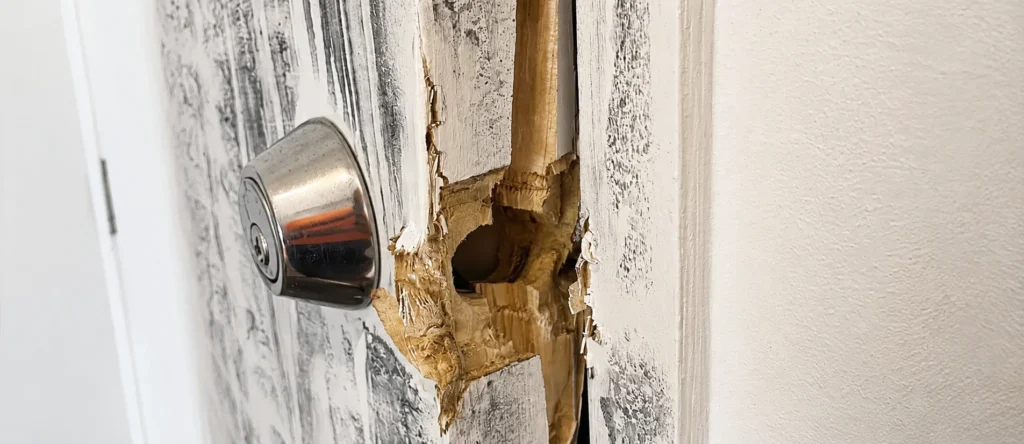
Burglars often attack the area around the latch or strike plate rather than the lock itself.
As a result, the door may still close but remain weak because the frame has split, the strike plate has moved or the fixing screws have pulled out.
Warning signs include:
- Cracks around the strike plate
- Loose or split timber
- A bent metal frame
- A door that no longer aligns
- A deadbolt that will not extend fully
- Loose handles
- Movement when the locked door is pushed
- Visible gaps around the door
Replacing the lock alone will not repair a badly damaged frame.
A locksmith can inspect the lock, hardware and alignment. However, a carpenter, glazier, builder or door specialist may also need to repair structural damage.
Break-in repairs Gold Coast businesses may require
A commercial break-in can prevent a shop, office, warehouse or factory from opening safely.
Commercial repairs may involve:
- Aluminium shopfront locks
- Commercial mortice locks
- Roller-door locks
- Padlocks and chains
- Office doors
- Storerooms
- Restricted-key systems
- Master key systems
- Door closers
- Gates
- Emergency exits
- Electronic access hardware
The owner or manager should confirm whether the offender stole keys, access cards, remotes or security information.
Additionally, staff access may need to change immediately. A locksmith can rekey affected mechanical locks, while an electronic-security technician may need to cancel cards, update access control or reprogram other equipment.
Check other entry points
A break-in often exposes a wider security weakness.
Therefore, after repairing the main entry point, inspect:
- Other external doors
- Side gates
- Sliding doors
- Garage access doors
- Screen doors
- Windows near door handles
- Storage areas
- Rear business entrances
- Padlocked gates
- Shared building doors
Look for worn locks, loose handles, weak strike plates, poor alignment or doors that no longer close correctly.
Our guide to common door lock problems explains several warning signs that can lead to lock failure.
Should you upgrade the lock?
A break-in repair does not always require a major security upgrade. Nevertheless, it provides a good opportunity to correct weak, damaged or unsuitable hardware.
Possible improvements include:
- A stronger deadlock
- Better-quality door furniture
- A reinforced strike plate
- Longer and stronger fixing screws
- A lock suited to the door type
- Rekeying to remove access from stolen keys
- A restricted-key system for a business
- Additional locking on vulnerable doors
- Improved gate or garage security
The correct solution depends on the door, frame, property type and method of entry.
Adding a stronger lock to a weak or damaged door will not solve the complete problem. Instead, the door, frame, lock and strike plate must work together as one secure entry point.
When do you need emergency break-in repairs?
Arrange urgent assistance when:
- The property cannot lock
- The front door will not close
- The cylinder has been forced out
- The lock or handle has broken
- Keys have been stolen
- A business cannot secure its premises
- The damaged entry point leaves people or property exposed
- You need temporary security overnight
Goldy Locksmiths provides 24 hour emergency locksmith services for suitable urgent lock and door-security problems across the Gold Coast.
Always contact police first when the break-in is still happening, someone may remain inside or anyone faces immediate danger.
How much do break-in repairs Gold Coast services cost?
The cost depends on:
- The number of damaged entry points
- The lock and door type
- The extent of the damage
- The time of attendance
- Whether temporary security is required
- The replacement hardware
- Whether locks need rekeying
- The number of new keys
- Door-frame or building repairs
- Commercial or specialised hardware
Photos can help the locksmith understand the likely work before attending.
Send clear photographs of the complete door, both sides of the lock, the door edge, the frame and all visible damage.
The locksmith should explain additional repair or replacement work before proceeding.
Keep damaged parts and repair records
Keep damaged locks, cylinders and hardware unless police, your insurer or the repairer advises otherwise.
Also keep:
- The police report or reference number
- Photographs of the damage
- Locksmith invoices
- Hardware receipts
- Written repair recommendations
- Insurance correspondence
- Details of stolen keys
- Records of replacement keys
These records may help with insurance claims, rental-property communication and future security planning.
Support after a property crime
A break-in can affect people long after the physical damage has been repaired.
For example, people may feel unsafe, anxious or unable to relax inside the property. These reactions can occur even when nobody suffered a physical injury.
Queensland residents can find information about support and recovery through Victim Assist Queensland.
You can also speak with police, your insurer or an appropriate support service when you need further assistance.
Arranging break-in repairs Gold Coast wide
Goldy Locksmiths assists with suitable break-in repairs Gold Coast wide for homes, rental properties, shops, offices and commercial premises.
We can inspect damaged locks, restore urgent access, rekey compromised cylinders and replace broken or unsuitable hardware.
Where the damage also requires building, glazing, electrical or electronic-security work, we can explain which parts require another qualified trade.
After reporting the incident and following police instructions, call Goldy Locksmiths on 0403 771 632 or use our contact page.
Frequently asked questions
Should I call a locksmith or the police first?
Call police first when the break-in is still happening, someone may remain inside or anyone faces danger. For a non-urgent incident, report it through Policelink and follow the instructions provided before arranging repairs.
Can a locksmith secure the property temporarily?
A locksmith can often install temporary security when permanent repairs require specialised parts or additional building work.
Should I change the locks if keys were stolen?
Rekey or replace every affected lock promptly so the stolen keys no longer work. Also cancel stolen access cards and reprogram garage remotes where required.
Can a damaged lock still be safe to use?
A lock may appear to work but still contain bent, cracked or weakened parts. Ask a locksmith to inspect it before relying on it again.
Does the complete door need replacement?
Not always. The lock and hardware may be repairable, although severe damage to the door or frame may require a carpenter, builder or door specialist.
Can photos help with a repair estimate?
Clear photographs can help identify the hardware and visible damage. However, the locksmith may still need to inspect the door onsite before confirming the complete repair.