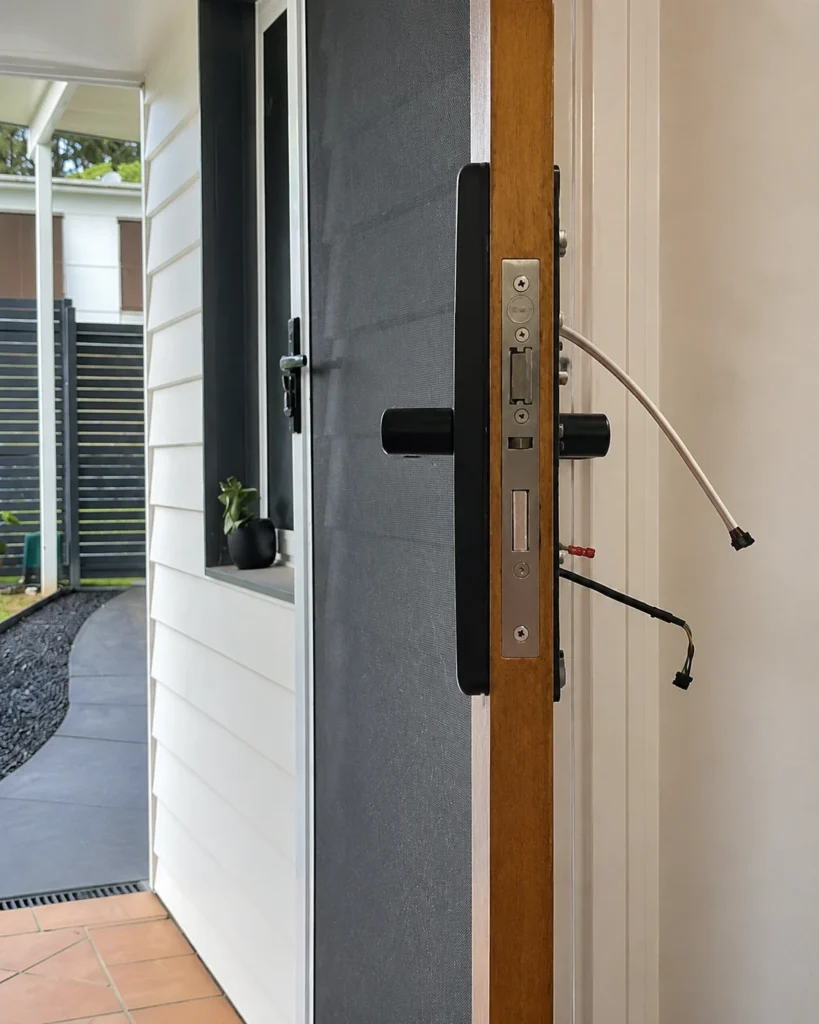
A smart lock can often be installed on an existing door easily. Compatibility depends on the door type, existing lock and cut-outs, backset, door thickness, frame and the smart lock being considered.
Some doors accept a straightforward retrofit. Others need modification, refinishing, scar plates or an alternative access-control solution.
Before buying a smart lock, it is worth having the existing door and hardware checked. This helps avoid purchasing a lock that does not suit the door type or cover the existing holes, which could require extensive modifications and additional costs.
Can a smart lock on an existing door be installed?
In many cases, yes.
Timber entrance doors with common tubular latches, deadbolts or standard lockset preparation often provide the simplest installation. However, even two similar-looking timber doors can have different measurements and internal hardware.
The locksmith needs to confirm:
- The door material
- The door thickness
- The existing lock type
- The backset
- The size and position of existing holes
- Whether the door is exposed to weather
- Whether the door is fire rated
- Whether approval is required
A suitable smart lock should operate the door reliably, cover the existing preparation neatly and allow the door to latch and lock without being forced.
Smart locks on timber doors
Timber doors usually offer the greatest range of smart-lock options because they can often be modified more easily than aluminium, glass or fire-rated doors.
Possible installations include:
- Keypad deadbolts
- Smart lever locks
- Electronic entrance sets
- Retrofit devices that operate an existing deadbolt
- Smart mortice locks
- The width and thickness of the aluminium stile
- The existing mortice lock
- The backset
- Existing handle position and holes
- The door frame and strike
- Whether the door is residential or commercial
- Apartment entry doors
- Aluminium doors
- Commercial doors
- Higher-quality residential doors
- Older entrance doors
- Doors with separate handles and cylinders
- The lock-case and faceplate size
- The backset
- The size and position of any existing holes
- The frame and strike plate
- A round lockset hole
- A separate deadbolt hole
- A mortice pocket
- Handle screw holes
- Marks left by a large escutcheon
- Misaligned or enlarged holes
- Selecting a lock with a larger footprint
- Installing a suitable scar plate
- Repairing and refinishing the door
- Reusing part of the existing hardware
- Replacing the complete door arrangement
- The lock body may not fit within the available door space
- Existing holes may remain visible
- The spindle or tailpiece may not engage
- The handle may interfere with the frame, security screen or other hardware
- Check the door-edge tags or building records to confirm whether it is fire rated
- Contact the body corporate, building manager, landlord or property manager
- Confirm whether written approval is required
- Use hardware approved for the door and intended application
- Avoid permanently modifying the door until approval has been obtained
- Will the screen door still require a key?
- Can the screen lock also be upgraded?
- Will the smart lock handle hit the screen?
- Does the screen door need to remain locked for security?
- Sliding-door mortice locks
- Hook bolts
- Patio bolts
- Multi-point locks
- Surface-mounted locks
- Higher daily usage
- Exposed to elements
- Aluminium frames
- Short-backset mortice locks
- Emergency-exit obligations
- Existing master-key systems
- Standalone mechanical keypad locks
- Electronic strikes & hardwired keypads
- Commercial grade smart mortice locks
- The external weather rating
- Direct rain & sun exposure
- Coastal salt exposure
- Temperature around the door
- Protection from eaves, awnings etc.
- PIN-code access
- Fingerprint access
- Biometric access, including facial recognition
- App control via Bluetooth
- Remote access over Wi-Fi
- Temporary guest codes
- Access history and audit logs
- Automatic locking and unlocking
- Physical key override
- Integration with other smart-home devices
- One photo of the complete door from outside including any security screen
- One angled photo from inside that also shows the door edge
- A photo of the strike plate and the frame
- The smart-lock model, if already purchased
- The lock does not suit the existing holes
- The backset or faceplate is wrong
- Existing holes remain exposed
- The product lacks suitable weather protection
- The model does not comply with the fire regulations
- The door remains structurally sound
- The new lock can use or cover the existing preparation
- Minor modifications can be completed neatly
- The frame and strike remain serviceable
- The door closes and aligns correctly
- The chosen lock suits the door material
* Quality locks with built-in or optional Wi-Fi bridges
Before fitting a smart lock, the door should close correctly.
A door that has dropped or swollen and moves out of alignment can place pressure on the latch or deadbolt. The motor inside a smart lock may then struggle to lock the door, even though the lock itself is working correctly.
Therefore, door issues must be identified before installation and alignment problems should be corrected during installation.
Our guide to common door lock problems explains several warning signs, including stiff keys, loose handles and misaligned doors.
Smart locks on aluminium-frame doors
Aluminium doors commonly have narrow vertical stiles and short-backset mortice locks. These features can significantly limit the available smart-lock options.
Many residential smart locks are too wide for a narrow aluminium stile. Others require a deeper backset or more internal space than the door provides.
A locksmith may need to assess:
Some aluminium doors can accept a purpose-designed narrow-stile electronic lock. In other situations, a keypad, electronic strike or access-control system may be more suitable than a standard residential smart lock.
Do not drill an aluminium door until the complete lock arrangement has been confirmed. Incorrect holes can be difficult to repair and may permanently affect the appearance of the door.
Existing mortice locks
A mortice lock uses a lock case installed inside a pocket cut into the edge of the door.
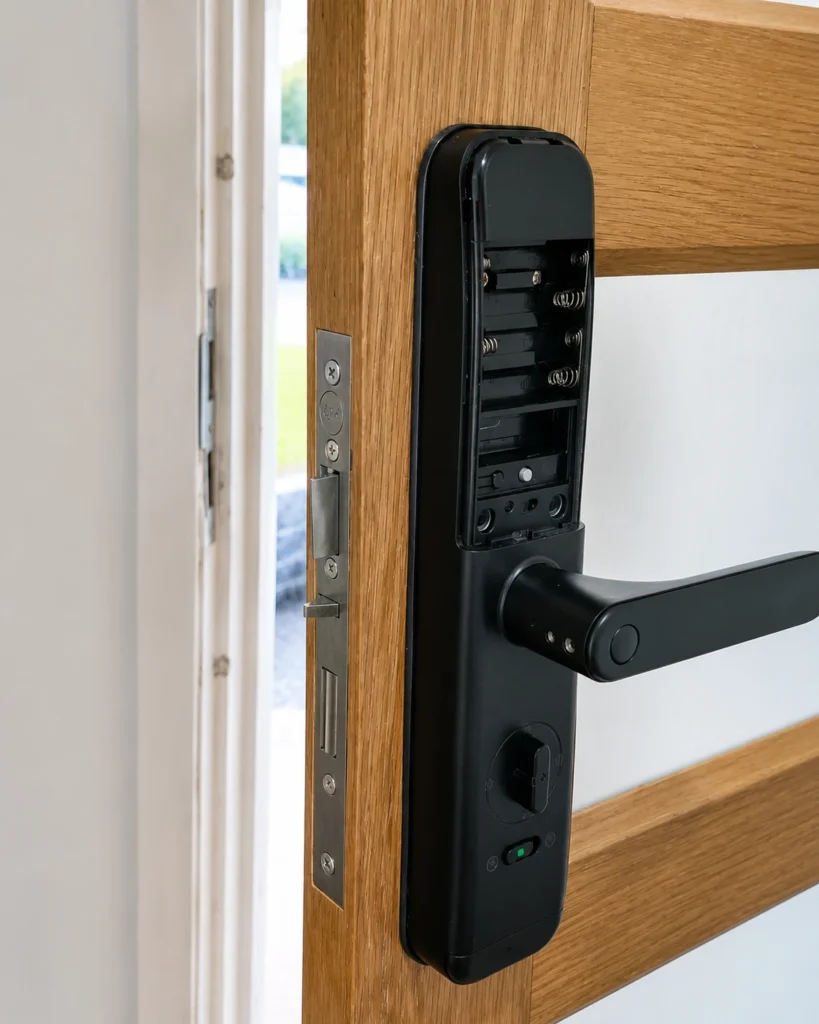
Mortice locks are common on:
A smart lock cannot automatically replace every mortice lock.
The replacement needs to match or account for:
In some cases, the existing mortice lock can remain and a compatible electronic trim can operate it. In other cases, the entire mortice lock and external furniture need replacement.
Commercial short-backset mortice locks can be particularly restrictive. A hardwired keypad and electronic strike may provide a more reliable long-term solution than trying to adapt a domestic smart lock to unsuitable hardware.
Existing holes and cut-outs
The existing door preparation affects both compatibility and the final appearance.
When removing the old lock, the door may have:
The new smart lock needs to cover these openings securely and neatly.
Sometimes the new lock has a smaller footprint than the previous hardware. As a result, old holes, marks or damaged paint may remain visible.
Possible solutions include:
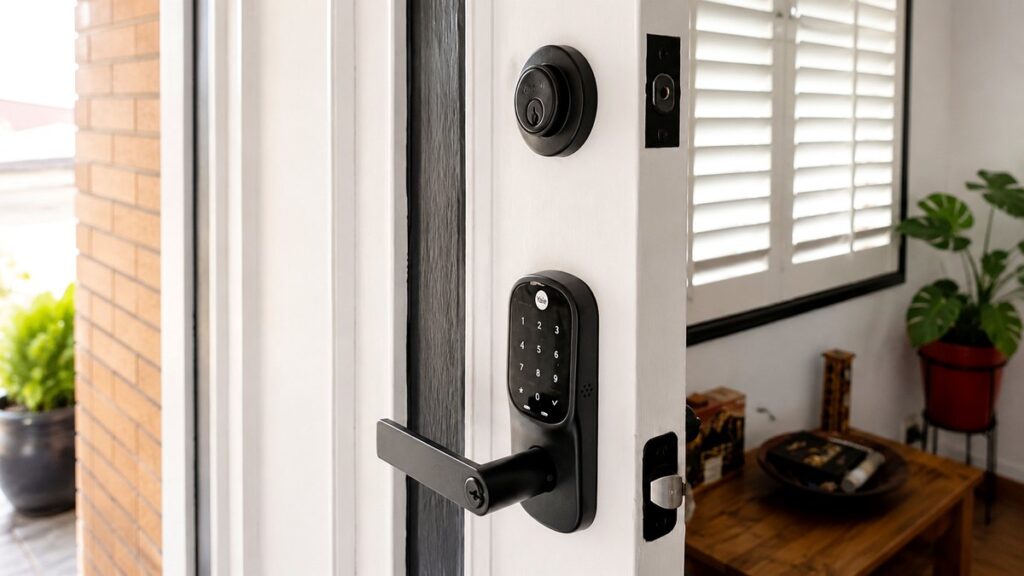
A locksmith should check both sides and the edge of the door before recommending a model.
Backset and door thickness
The backset is the distance from the edge of the door to the centreline of the main key cylinder or handle spindle
Smart locks are designed to work within specific backset and door-thickness ranges. A lock may look suitable from the outside but still fail to connect correctly through the door.
If the backset is wrong:
The door thickness also affects the screws, spindle, tailpiece and connection between the internal and external lock bodies.
These measurements should be confirmed before ordering the lock.
Fire doors, apartments and body corporate approval
Apartment, unit and shared-building entrance doors may be fire rated or form part of the building’s common property, fire-safety system.
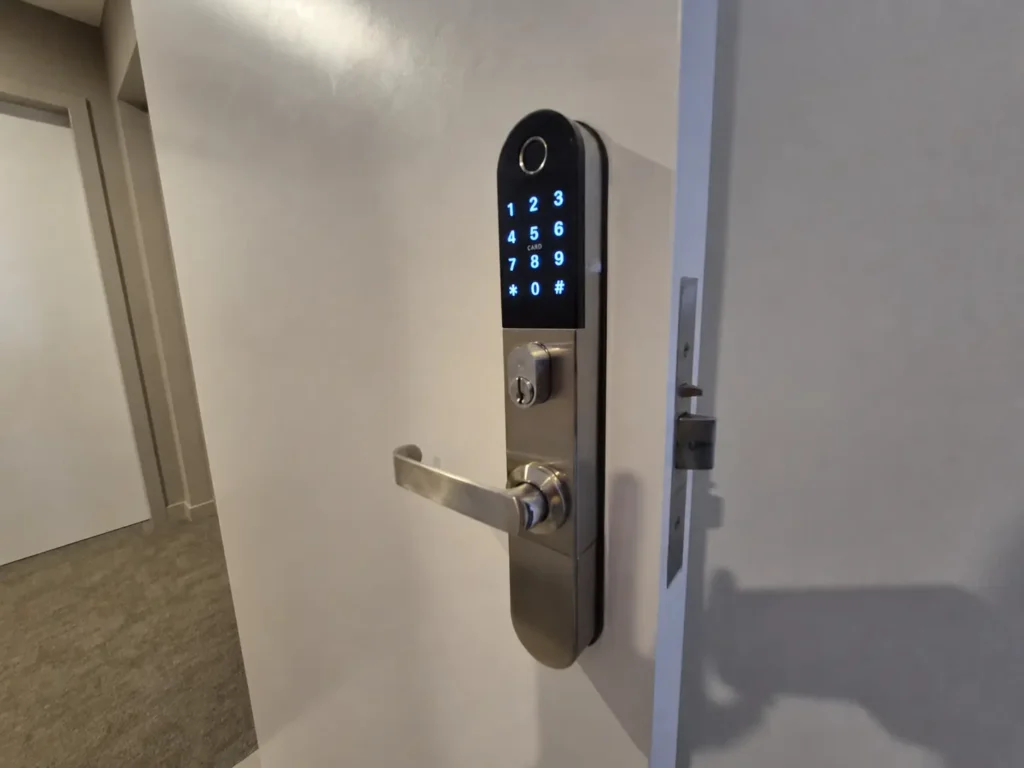
A fire door is a complete assembly. The door, frame, closer, seals, latch and approved hardware must work together, so drilling new holes, removing required hardware or fitting an unsuitable smart lock may affect its compliance or performance.
Before changing the lock or door hardware:
Approval may be required if the installation changes the external appearance, adds new holes, alters a fire-rated door or removes the original lock.
A standard residential smart lock should not be fitted simply because its dimensions appear to match. For more information, see the Queensland Government guidance on improving common property and lots.
Security screens and second doors
A smart lock on the main timber door may not solve access problems when a security screen remains locked in front of it.
Before choosing keyless entry, consider the complete entry sequence.
For example:
Some customers keep the existing keyed screen lock and install smart access only on the main door. Others need a coordinated solution for both doors.
There is no benefit in installing convenient keyless entry on one door if another locked door still prevents access.
Sliding doors and patio doors
Most standard smart deadbolts and smart lever locks do not suit sliding doors.
Sliding doors use different locking mechanisms, including:
Electronic options exist for some sliding doors, but they are more limited and depend heavily on the existing frame and lock.
A locksmith should inspect the door before recommending a product. In some cases, improving the existing mechanical lock provides a better result than attempting to install an unsuitable smart lock.
Commercial doors may need a different solution
A smart lock designed for a house may not be suitable for a shop, office, warehouse or factory.
Commercial doors often have:
For commercial sites, suitable alternatives may include:
The correct option depends on the door, number of users, access requirements and expected service life.
Goldy Locksmiths provides smart-lock and keyless-entry services for suitable residential and commercial doors across the Gold Coast.
Weather exposure and coastal conditions
An external smart lock needs to suit the conditions around the door.
A lock installed under a deep porch experiences less weather than one exposed directly to rain, sun and salt air.
Check:
The internal half of a smart lock can very rarely tolerate outdoor exposure.
For gates and fully exposed doors, a hardwired keypad with electronic strike or mechanical digital lock may be more appropriate.
Which smart-lock features do you actually need?
Compatibility comes first, but the lock should also suit how the property is used.
Possible features include:
Not every customer needs biometrics, remote access or physical key overrides.
A standalone keypad lock can be simpler for a rental, office, family home or business that only needs reliable code entry.
Remote access over Wi-Fi can be useful for Airbnb properties, cleaners, contractors and other short-term access needs.
Choose the simplest system that meets the actual access requirements.
What photos should you send before booking?
Clear photographs can often identify whether a smart lock on an existing door is likely to fit.
Send:
We may ask you to include a tape measure or ruler in certain photos so we can confirm the door thickness, backset or stile width where required.
Photos help with the initial assessment, but they may not reveal every required measurement or hidden problem. A site inspection may still be required before confirming the installation.
Should you buy the smart lock before the assessment?
It is usually safer to confirm compatibility first.
Customer-supplied locks often create problems when:
A locksmith can help narrow down suitable options before money is spent on the wrong product.
If you have already purchased a lock, send the model details and door photos before booking the installation.
When is replacing the door unnecessary?
A complete door replacement is usually unnecessary when:
However, replacement or building work may be needed when the door is severely damaged, rotten, split, warped or prepared for hardware that cannot be adapted cleanly.
In some cases, repairing the door and fitting a suitable mechanical lock provides better value than forcing a smart-lock installation onto a poor foundation.
Arranging a smart-lock compatibility assessment
The best smart lock is not simply the model with the longest feature list. It is the model that fits the door correctly, operates reliably and suits the way the property is used.
Goldy Locksmiths can assess timber doors, aluminium frames, existing mortice locks, cut-outs, commercial doors and other common compatibility issues.
We can also explain when a keypad, electronic strike, commercial access solution or conventional mechanical lock would provide a better result.
To ask about installing a smart lock on an existing door, send photos through our contact page.
Frequently asked questions
Can any existing door take a smart lock?
No. Compatibility depends on the door material, measurements, existing preparation, lock type, frame clearance and any fire-door or building restrictions.
Can a smart lock use the existing holes?
Sometimes. The new lock must match the preparation or completely cover the old holes. Otherwise, a backing plate, repairs or a different model may be required.
Can you install a smart lock on an aluminium door?
Some aluminium doors can accept narrow-stile electronic locks. However, many common residential smart locks are too wide or require a different backset.
Can a smart lock replace a mortice lock?
Only when the new hardware is compatible with the existing mortice preparation or the door can be modified appropriately. Mortice-lock dimensions vary considerably.
Can a smart lock be fitted to a fire door?
Do not modify a fire door until its rating, approved hardware and installation requirements have been confirmed. Body corporate, building-management or specialist approval may also be required.
Do I need body corporate approval?
Approval may be required for apartment entry doors, common property, fire doors or changes affecting the building’s external appearance. Check with the body corporate or building manager before installation.
What photos should I send?
Send clear photos of both sides of the complete door, the open door edge, strike plate and any nearby security screen.
Should I buy the smart lock first?
Confirming compatibility before purchase reduces the risk of buying a lock that does not fit, exposes existing holes or cannot operate the door reliably.